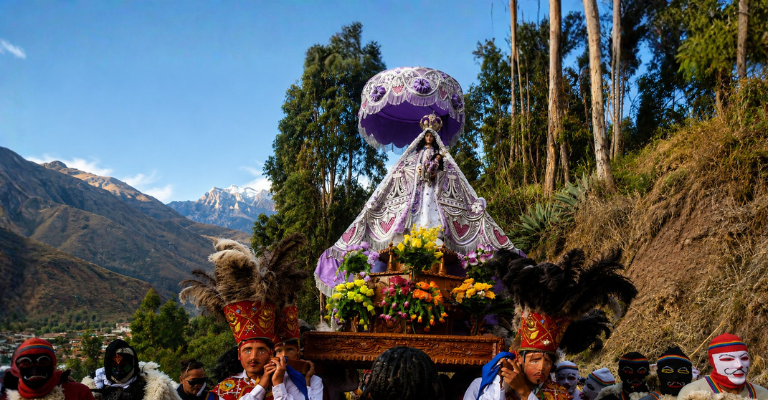
The Mamacha Carmen festival in Paucartambo has become increasingly well known among travelers visiting Cusco in July. But there is another patron festival, in early September, that despite carrying the same cultural weight continues to go unnoticed in the world of folk cultural tourism: the Virgin of the Nativity, celebrated on the same day in different towns across Cusco, each with its own devotion, its own local name and its own way of living it.
If your September trip takes you through the Sacred Valley, this guide tells you where it is celebrated, what makes it special in each place and how to experience it with the respect it deserves.
One festival, three different ways of living it
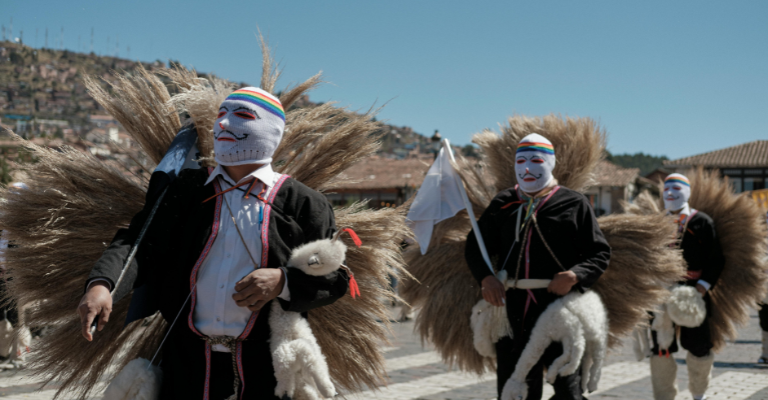
On September 8, the Catholic Church celebrates the Nativity of the Virgin Mary. In the Cusco region, this date is lived simultaneously in several communities, and over time each one developed its own identity around the same devotion: Huayllabamba, in the province of Urubamba; Chinchero, in the Sacred Valley; and the Santiago neighborhood in the city of Cusco. This is not a single festival replicated across locations — these are three distinct traditions that share a date and an origin.
Huayllabamba: the festival declared a National Cultural Heritage site
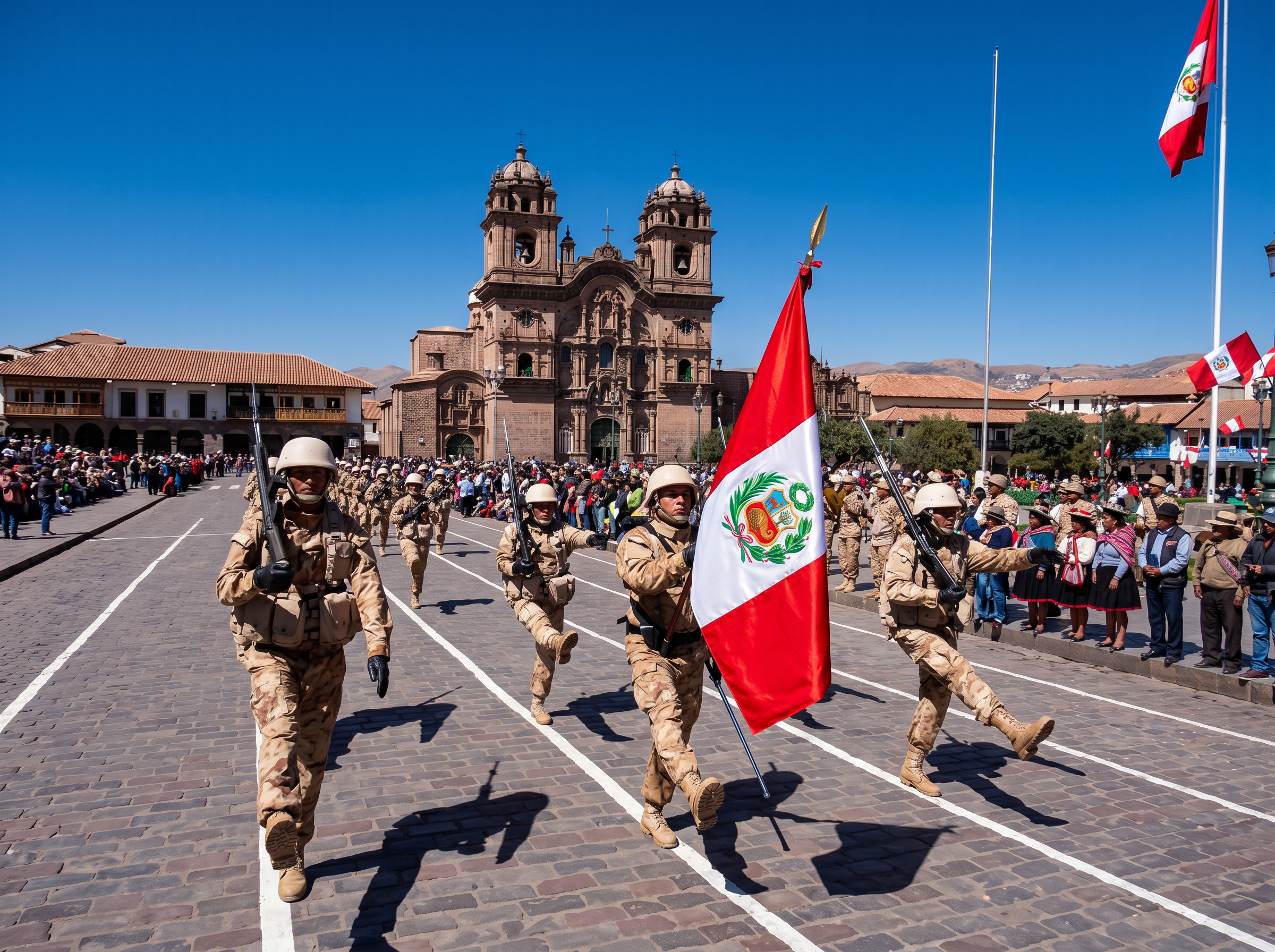
Of the three, the one in Huayllabamba carries the greatest official recognition: in 2022, Peru’s Ministry of Culture declared it a National Cultural Heritage site, an honor very few festivals in the region have received. It is celebrated from September 7 to 15 in the district capital, with the central day on September 9, when a solemn Mass is held in the town square.
Why this festival is different: the apus and the agricultural cycle
What led the Ministry of Culture to recognize this particular festival is its syncretic nature: it is not only Catholic devotion, it also incorporates the veneration of the apus (the guardian mountain spirits in the Andean worldview) and is tied to the agricultural cycle of the area. The organization falls on the carguyoq, or stewards — a religious role that the community assumes in turns each year, with specific responsibilities within the festive ritual. It is a festival that sustains, quite literally, the identity of the town.
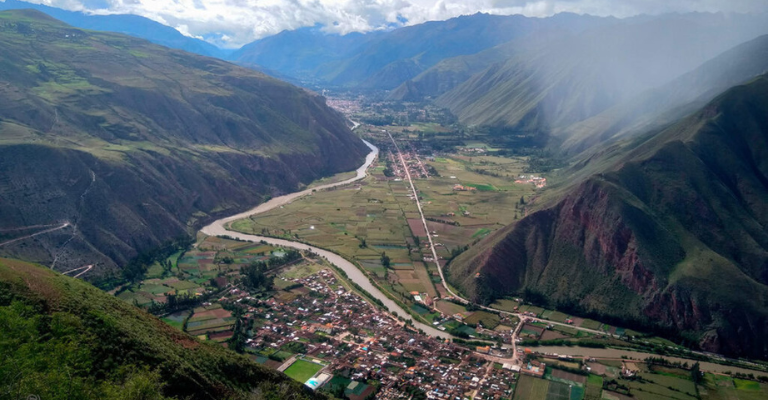
How to get there from the Sacred Valley
Huayllabamba is part of the province of Urubamba, a short distance from the city of Urubamba and the rest of the Sacred Valley circuit. The central day is September 9, with a solemn Mass in the town square; the days of dances and folk performances run from September 7 to 15, with additional activities often held at the district stadium. The local municipality and parish typically publish the detailed program on Facebook a few weeks in advance, so if your priority is photographing the dance groups at a specific time, it is worth checking closer to your travel dates.
Chinchero and Cusco: two more ways of living the same devotion
The Virgin of the Nativity in Chinchero
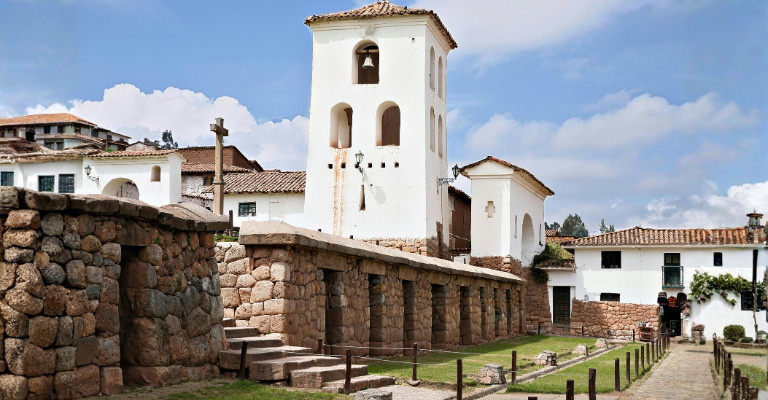
In Chinchero, the image is venerated at the Church of Our Lady of Montserrat, built in 1607 on the foundations of the ancient palace of the Inca Túpac Yupanqui. The main altar is carved in gold leaf in the Baroque style, with paintings from the Cusco School on its walls. On September 7 there is an evening Mass at 7:00 p.m., and on September 8, the central day, Mass is at 11:00 a.m., followed around midday by the procession, which brings together more than 30 folk groups accompanying the image through the streets of the town. In the afternoon there is usually a dance and beauty contest, and the night closes with serenades, music and fireworks. It is common to see the women of the town dressed in their traditional polleras in red, green and black.
The Almudena in Cusco: the «Mamita Nati»
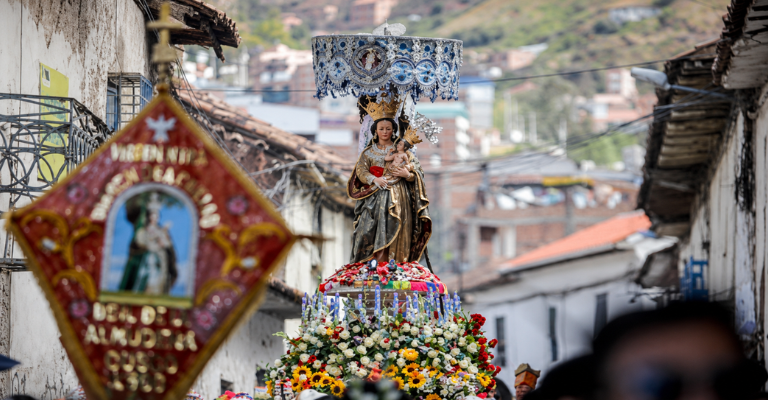
In the Santiago neighborhood of the city of Cusco, the same Marian devotion is celebrated under the name of the Virgin of the Almudena, affectionately called «Mamita Nati» by her devotees. This is the largest and most attended of the three, with a dancers’ Mass, a dance contest and a procession that winds through much of the neighborhood between September 7 and 9. On the central day (September 8), Mass is at 11:00 a.m. and the procession begins at 2:00 p.m., going down Almudena, Hospital, San Pedro and Santa Clara streets to Plaza San Francisco, then returning through Nueva Alta, Arcopata and Umanchata to the Plazoleta de la Almudena around 7:00 p.m., with more than 28 groups participating. September 9 brings the dancers’ Mass and the dance contest, with a second procession toward the Zarzuela sector.
How to experience this festival with respect
This is not a quiet, single-note celebration. Alongside the Mass and the procession there is beer, chicha and traditional drinks sold in the street, and the brotherhoods and dance groups often extend the festivities with food, orchestral music and dancing well into the night, once the religious part has ended. It is a festival lived with the same intensity as the faith behind it, and it is worth arriving with that expectation.
If you decide to attend, the most important thing is to remember that you are witnessing something deeply meaningful to those who live it — not a show arranged for visitors. Keep a respectful attitude during the Mass and the procession, ask permission before photographing devotees or the brotherhood up close, and enjoy the rest of the festival with the same naturalness with which the community lives it.
What else to do if you are in Cusco in September
Gastronomy and experiences at the table
September, beyond the patron festival, is a good opportunity to go deeper into Cusco cuisine. If you want a guide to what to try during your trip, check out our article on typical food of Cusco, with the dishes you should not miss.
Places to visit in the Sacred Valley
If your itinerary includes free time between festivities, the Sacred Valley has more than enough to fill several days: Moray, the Maras Salt Mines, Ollantaytambo and Pisac are part of the classic circuit. You can check our complete guide to the Sacred Valley tour to plan your route.
And Machu Picchu?
If you are coming to Cusco in September, Machu Picchu is most likely already the main reason for your trip, and the Virgin of the Nativity will end up being an unexpected bonus rather than the other way around. If your dates line up, it is well worth adding one of these towns to your itinerary before or after visiting the citadel.
Combine these festivals with your stay in the Sacred Valley at Andean Wings Valley
Staying in the Sacred Valley rather than in the city of Cusco puts you closer to both Huayllabamba and Chinchero, and allows you to experience the festival without depending on a long round trip to Cusco on the same day. At Andean Wings Valley, in Urubamba — the very same province where the Huayllabamba festival is celebrated — you can build your September stay around these patron festivals and the rest of the valley.
Write to us and build your September stay in the Sacred Valley around these patron festivals. Book at Andean Wings Valley.
Frequently asked questions about the Virgin of the Nativity in the Sacred Valley and Cusco
Is there an entrance fee to attend these festivals?
No. The Masses and street processions are free and open to the public in all three locations.
Is the Virgin of the Nativity the same as the Virgin of the Almudena?
Yes. Both names refer to the same Marian devotion — the Nativity of the Virgin Mary, celebrated on September 8. «Almudena» is simply the name given to the image and the church in the Santiago neighborhood of Cusco.
Three towns, one date, three different ways of living the faith. If your September trip takes you through the Sacred Valley, it is worth making room for one of these festivals in your itinerary — and at Andean Wings Valley, we will help you put it together.
This article is also available in Spanish: Virgen de la Natividad en el Valle Sagrado: la fiesta patronal que se vive en Huayllabamba, Chinchero y Cusco.